
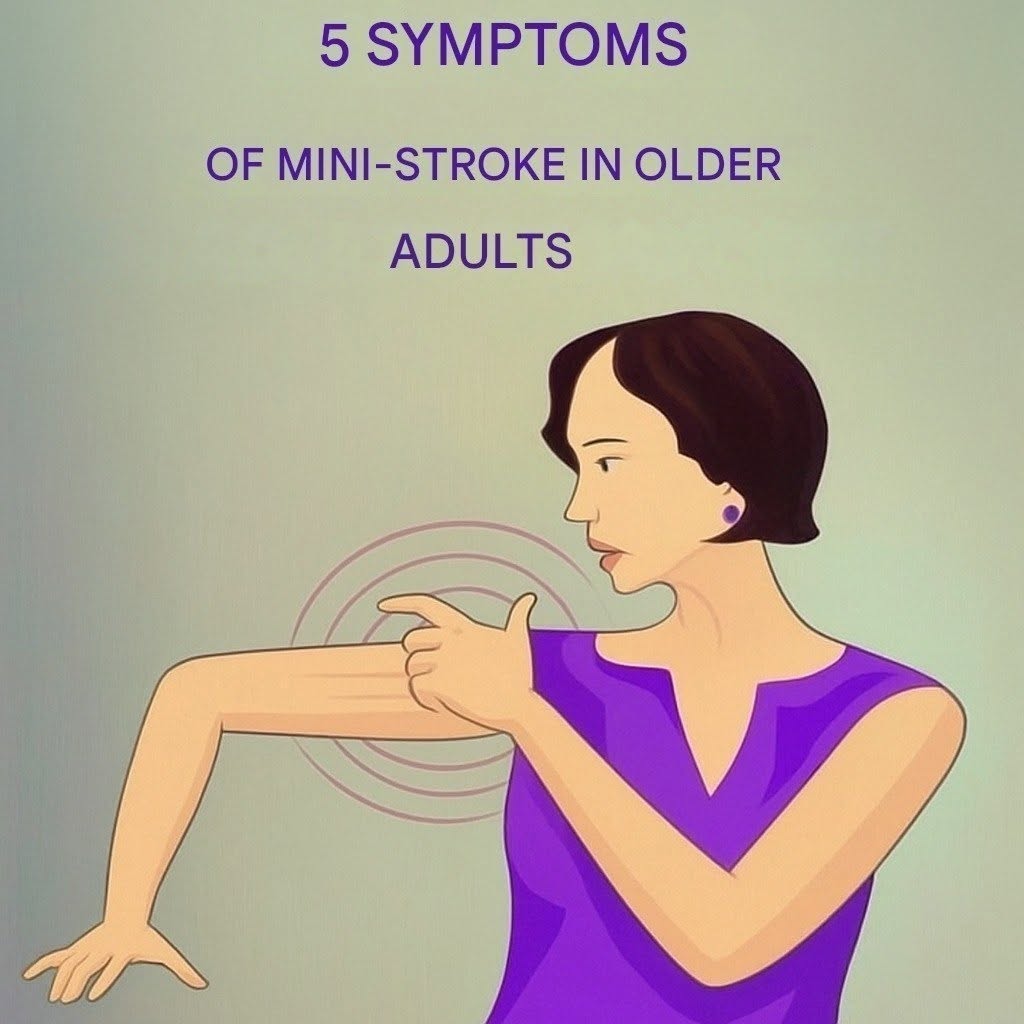
A sudden change in someone’s speech, strength, vision, or balance can be frightening—and in some cases, it may signal a transient ischemic attack (TIA), often called a mini-stroke.
A TIA happens when blood flow to part of the brain is temporarily interrupted. The symptoms may disappear after a short time, but that does not mean the situation is harmless. A TIA can be a warning that a more serious stroke could follow.
The original article highlights several temporary neurological symptoms that should prompt immediate medical attention.
1. Sudden Weakness or Numbness
One of the most important warning signs is sudden weakness or numbness, particularly on one side of the body.
It may affect:
- An arm
- A leg
- The face
- More than one area on the same side
For example, someone may suddenly struggle to raise one arm or develop an uneven smile.
Even if the weakness disappears, don’t simply assume everything is fine. Sudden one-sided weakness can be a sign of a TIA or stroke and requires urgent medical assessment.
2. Sudden Trouble Speaking
Another possible warning sign is a sudden change in speech.
A person may:
- Slur their words
- Have difficulty finding the right words
- Say something that doesn’t make sense
- Struggle to understand what others are saying
- Suddenly have trouble communicating
The linked article specifically identifies difficulty speaking or understanding language as a possible TIA symptom.
These changes can happen suddenly and may be temporary.
That temporary nature is exactly why they can be easy to dismiss—but they shouldn’t be.
3. Sudden Changes in Vision
Vision problems can also occur during a TIA or stroke.
A person might suddenly experience blurred or lost vision, particularly in one eye, or have difficulty seeing normally.
Sudden vision loss or a major unexplained visual disturbance should be treated as a medical emergency rather than waiting to see whether it goes away.
4. Sudden Dizziness or Loss of Balance
A person may suddenly become extremely dizzy, unsteady, or have difficulty walking.
They might appear as though they are losing their balance for no obvious reason.
Although dizziness has many possible causes, a sudden episode accompanied by other neurological symptoms—such as weakness, speech problems, or vision changes—is particularly concerning.
5. A Sudden, Unexplained Change in Coordination
Another possible warning sign is a sudden loss of coordination.
Someone who normally walks or moves normally may suddenly struggle to control their movements or perform familiar tasks.
When this occurs alongside other sudden neurological changes, it should not be ignored.
Why a “Mini-Stroke” Is Still Serious
One of the biggest misconceptions about a TIA is that it’s harmless because the symptoms disappear.
The symptoms may indeed be temporary, but the event can serve as an important warning.
A TIA can indicate an increased risk of a future stroke, which is why prompt medical evaluation is important even when the person appears to have recovered.
The goal isn’t simply to treat the temporary symptoms. Doctors also need to investigate why the event happened and determine whether steps can be taken to reduce future stroke risk.
What Should You Do If These Symptoms Appear?
Don’t wait for symptoms to become severe.
If someone suddenly develops weakness, numbness, difficulty speaking, confusion, vision changes, severe balance problems, or another concerning neurological symptom, seek emergency medical help immediately.
If the symptoms disappear before help arrives, the person should still receive urgent medical evaluation.
It’s also useful to remember the acronym FAST:
F — Face: Is one side of the face drooping?
A — Arms: Is one arm weak or numb?
S — Speech: Is speech slurred or unusual?
T — Time: Call emergency medical services immediately.
Other sudden symptoms, including vision problems, severe dizziness, or loss of coordination, can also occur with stroke and should not be dismissed.
Don’t Wait for Symptoms to Return
A common mistake is thinking:
“They’re fine now, so there’s no need to worry.”
That’s dangerous reasoning.
Neurological symptoms that disappear can still represent a serious underlying problem. The original article emphasizes that temporary symptoms in older adults should not simply be ignored.
The safest approach is to have the person evaluated as quickly as possible.
The Bottom Line
A mini-stroke may not leave lasting symptoms, but it should never be treated as an ordinary episode of dizziness, weakness, or confusion.
Sudden weakness or numbness, speech difficulties, vision changes, dizziness, balance problems, and coordination problems can all warrant urgent medical attention.
When neurological symptoms appear suddenly, every minute matters.
If you or someone around you experiences possible stroke symptoms, contact your local emergency medical service immediately rather than waiting for the symptoms to disappear.