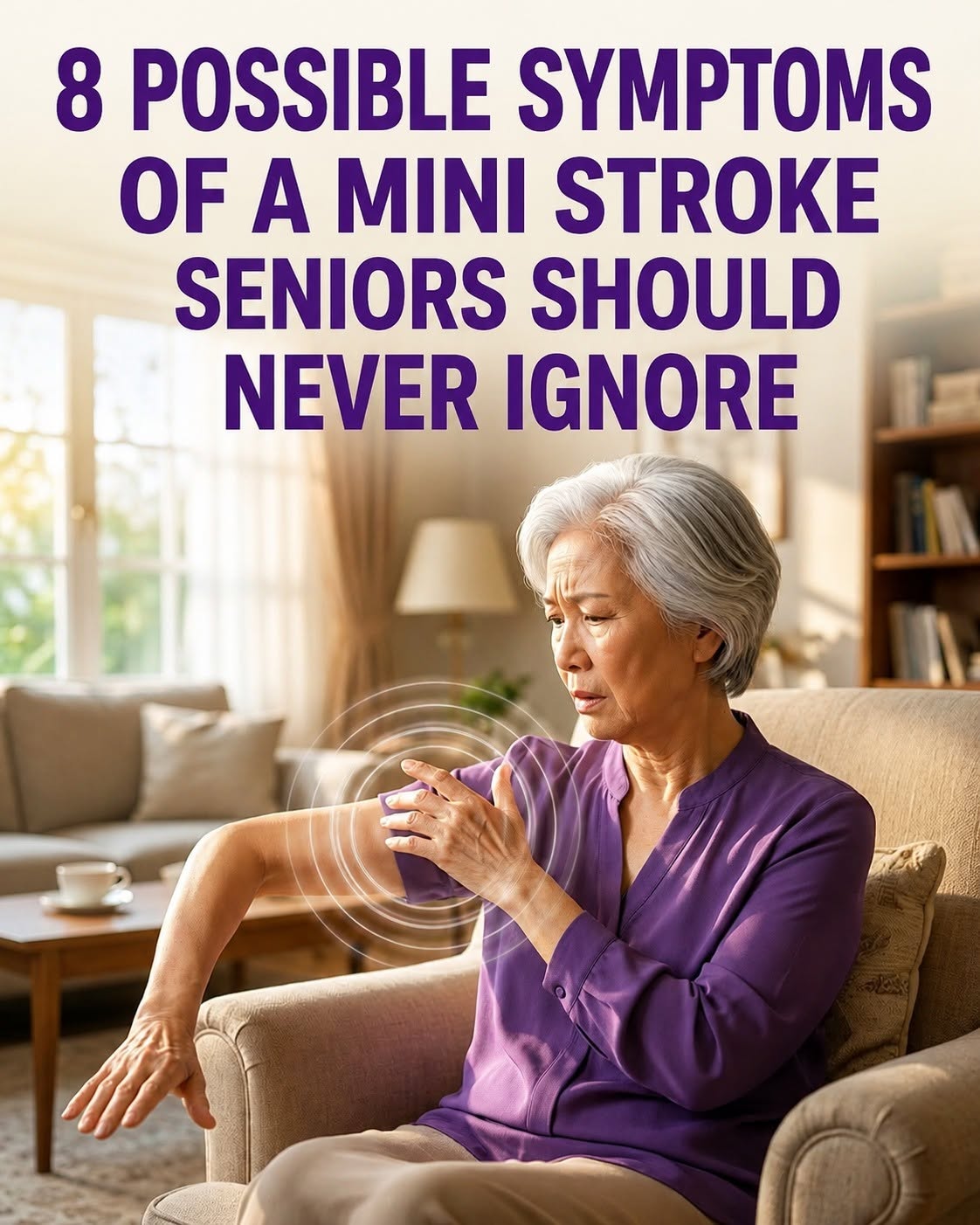
A mini stroke may sound less frightening than a major stroke, but it
should always be taken seriously. The medical name is transient ischemic
attack, often shortened to TIA. It happens when blood flow to part of
the brain is blocked for a short time. Symptoms may disappear within
minutes or hours, but that does not mean the danger is gone.
A TIA can be a warning sign that a full stroke may happen in the
future. The CDC describes a TIA as a “mini-stroke” and states that it is
a warning sign of a future stroke and a medical emergency, just like a
major stroke.
This is especially important for seniors. In older adults, mini
stroke symptoms may be mistaken for fatigue, stress, dizziness, poor
sleep, medication effects, or normal aging. But stroke-like symptoms
usually appear suddenly, and sudden changes should never be ignored.
Here are eight possible symptoms of a mini stroke that seniors and caregivers should recognize quickly.
1. Sudden Weakness or Numbness on One Side of the Body
One of the most common warning signs of a mini stroke is sudden
weakness or numbness, especially on one side of the body. This may
affect the face, arm, hand, leg, or foot. A person may suddenly drop an
object, struggle to raise one arm, feel that one leg is heavy, or notice
tingling on one side.
The source article describes one-sided weakness, numbness, tingling,
or a heavy feeling as a possible symptom that should be evaluated
immediately, even if it disappears quickly.
The CDC also lists sudden numbness or weakness of the face, arm, or
leg, especially on one side of the body, as a stroke warning sign.
2. Sudden Difficulty Speaking
Speech problems can be a major clue. During a mini stroke, a senior
may suddenly slur words, speak unclearly, struggle to find words, or
become unable to speak normally. Some people understand what others are
saying but cannot respond clearly.
This can be mistaken for ordinary confusion, tiredness, or memory
problems. But sudden speech changes should always be treated as urgent.
The NHS explains that TIA symptoms are the same as stroke symptoms, and
speech may become slurred, garbled, or difficult to understand.
3. Facial Drooping
Facial drooping is one of the easiest stroke signs to notice. One
side of the mouth may droop, the smile may look uneven, one eye may
appear weaker, or the face may feel numb.
A simple check is to ask the person to smile. If one side of the face
does not move normally, emergency help is needed. The source article
also highlights facial drooping, difficulty smiling evenly, eye
weakness, and facial numbness as possible mini stroke signs.
4. Sudden Vision Problems
A mini stroke may temporarily affect vision if blood flow to parts of
the brain or eye is interrupted. Symptoms may include blurred vision,
double vision, partial vision loss, or sudden blindness in one eye.
Some people describe the change as a dark curtain moving across the
eye. Because the symptom may last only a short time, it is easy to
ignore. But sudden vision changes should always be taken seriously. The
CDC lists sudden trouble seeing in one or both eyes as a stroke warning
sign.
5. Dizziness or Loss of Balance
Sudden dizziness, loss of balance, trouble walking, poor
coordination, vertigo, or falling unexpectedly may also be linked to a
mini stroke. In seniors, this symptom is often blamed on aging,
dehydration, inner ear problems, or medication side effects.
Those causes are possible, but sudden balance problems become more
concerning when they appear with weakness, speech trouble, face
drooping, vision changes, or confusion. The source article warns that
sudden balance issues, especially alongside other symptoms, may suggest
reduced blood flow to the brain.
6. Severe or Sudden Headache
A sudden, severe, unusual headache can sometimes happen with stroke
or mini stroke symptoms. It may feel dramatically different from the
person’s usual headaches or appear with dizziness, vomiting, confusion,
weakness, or vision changes.
Not every headache is a stroke symptom. But a sudden intense headache
with no known cause should never be ignored, especially in an older
adult. The CDC includes sudden severe headache with no known cause among
possible stroke symptoms.
7. Confusion or Memory Problem
A mini stroke may briefly affect mental clarity. A senior may
suddenly seem confused, have trouble understanding speech, forget simple
information, become disoriented, or act unusually.
Because these symptoms can disappear quickly, families may mistake
them for fatigue or age-related memory decline. But sudden confusion is
different from gradual forgetfulness. The CDC lists sudden confusion,
trouble speaking, or difficulty understanding speech as stroke warning
symptoms.
8. Temporary Paralysis or Sudden Loss of Coordination
Some people experience short periods where they temporarily lose
control over movement. This may include difficulty using the hands,
trouble standing, sudden clumsiness, or loss of muscle coordination.
Even if the problem lasts only a few minutes, it can signal a serious
interruption in blood flow to the brain. The source article emphasizes
that temporary paralysis or sudden loss of coordination should always be
evaluated immediately.
Why Mini Strokes Are So Dangerous
Many people underestimate a mini stroke because the symptoms often
disappear. But the disappearance of symptoms does not mean the cause has
been fixed. A temporary blockage may clear, but the underlying risk may
remain.
The NHS says TIA symptoms may resolve within minutes or hours, but
treatment is still needed to help prevent another TIA or a full stroke.
The CDC also notes that the risk of stroke within 90 days after a TIA
may be as high as 17%, with the greatest risk during the first week.
Common Risk Factors for Mini Stroke
Several factors may increase the risk of TIA or stroke, including
high blood pressure, diabetes, smoking, high cholesterol, heart disease,
obesity, inactivity, advanced age, and a previous stroke or TIA. The
CDC explains that people who have already had a stroke or TIA have a
higher chance of having another stroke.
These risk factors do not mean a person will definitely have a
stroke. But they make sudden symptoms more important to recognize and
act on quickly.
Remember FAST
FAST is a simple way to remember the main stroke warning signs:
F — Face: Is one side of the face drooping?
The NHS advises calling emergency services immediately if someone has
symptoms of a TIA or stroke, even if the symptoms disappear while
waiting for help.
How Doctors May Diagnose a Mini Stroke
Because symptoms may disappear before a person reaches the hospital,
doctors often use tests to look for signs of circulation problems and
future stroke risk. These may include brain imaging, blood pressure
checks, blood tests, ultrasound imaging, and heart monitoring. The
source article lists brain scans, blood pressure evaluation, blood
tests, ultrasound imaging, and heart monitoring as possible diagnostic
steps.
Medical evaluation matters because treatment depends on the cause. A
TIA may be linked to narrowed arteries, blood clots, heart rhythm
problems, high blood pressure, diabetes, or cholesterol-related plaque
buildup.
Ways to Reduce Future Stroke Risk
Not every stroke can be prevented, but many risk factors can be
managed. Helpful steps may include controlling blood pressure, managing
diabetes, checking cholesterol, quitting smoking, staying physically
active, maintaining a healthy weight, following prescribed treatment,
and attending regular medical checkups.
A heart-healthy diet that includes vegetables, fruits, whole grains,
lean proteins, and healthy fats can also support blood vessel health.
The source article also highlights blood pressure control, physical
activity, heart-healthy eating, smoking cessation, diabetes and
cholesterol management, and regular checkups as ways to reduce risk.
When to Seek Emergency Help
Call emergency services immediately if a senior has sudden weakness,
slurred speech, facial drooping, sudden confusion, vision loss, severe
dizziness, sudden severe headache, or sudden loss of coordination.
Do not wait to see if symptoms pass. Do not let the person “sleep it
off.” Do not drive yourself if emergency services are available.
A mini stroke may last only a short time, but it can be a serious warning that the brain is at risk.
Final Thoughts
Mini strokes can be brief, but they are never something to ignore.
Sudden weakness, speech problems, facial drooping, vision changes,
dizziness, severe headache, confusion, and temporary loss of
coordination all require urgent medical attention.
Fast action may help doctors find the cause, reduce the risk of a
future stroke, and protect long-term brain function and independence.
Disclaimer: This article is for general educational information only
and does not replace medical advice, diagnosis, or treatment. If you
suspect a stroke or mini stroke, call emergency services immediately.