
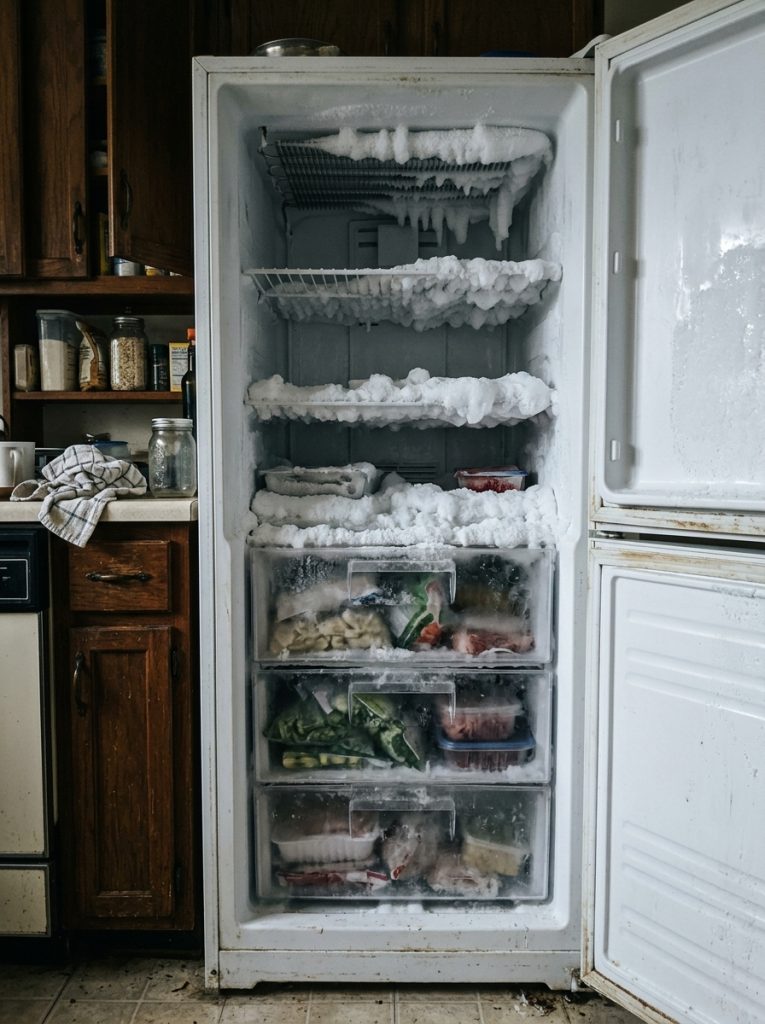
A freezer covered in frost is bad for your wallet and for the freshness of your food. But who wants to unplug everything and risk losing their precious supplies? Good news: there’s a brilliant trick to get rid of the ice in no time, without even turning off the power.
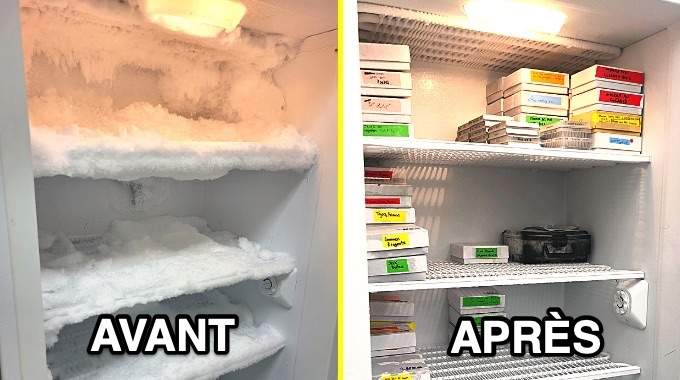
The ice that accumulates in your freezer isn’t just an aesthetic issue: it directly impacts the efficiency and lifespan of your appliance. Here’s why it’s crucial to take care of it regularly.
The real risks of a frosted freezer
When frost arrives, problems pile up. Not only does your electricity bill increase, but the shelf life of your food can also suffer.
A skyrocketing energy bill
Did you know that a simple layer of ice of 3 to 4 mm can increase your electricity consumption by 30%? To maintain the temperature, the motor has to work harder, which is directly reflected in your energy costs.
An engine put to the test
If you allow the frost to thicken, the motor may overheat. As a result, its efficiency drops and wear accelerates. In the long run, this can even cause premature appliance failure.
Foods that are less well protected
A thick layer of ice blocks the circulation of cold air, creating temperature variations inside. Some products are no longer frozen uniformly, which promotes bacterial growth and food wast
When is the time to take action?
The best approach: defrost as soon as the frost layer reaches 3 to 4 mm in thickness. If your freezer tends to build up frost quickly, increase the frequency. Generally, defrosting every 3 to 6 months is sufficient to ensure optimal performance.
The foolproof trick to defrost without unplugging.
No way you’re cutting everything off and risking your food defrosting? Here’s a clever method that speeds up the process without touching the power supply.
The detailed instructions
1. Organize your supplies.
Place all your food in a cooler or insulated bag with ice packs. This will keep it cold during the operation.
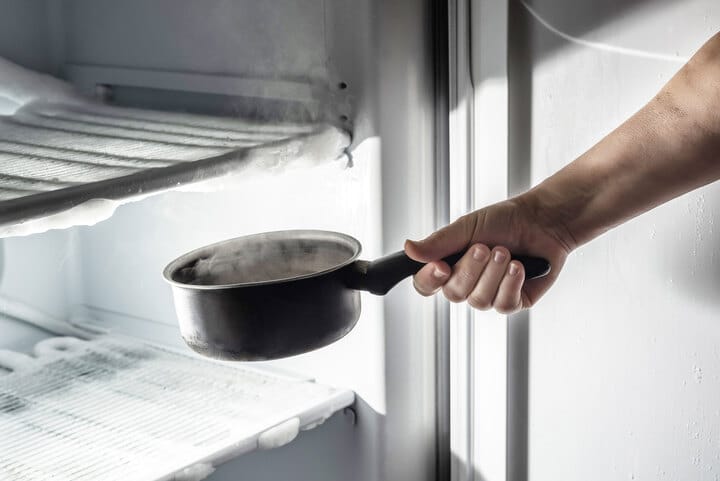
2. Use steam.
Place a large pot of boiling water inside the freezer,
then close the door. The steam released will significantly accelerate
the melting of the ice.
3. Let the warm air in.
Open the door every 5 to 10 minutes to let some warm air in. This further boosts the process.
4. Remove the melted ice.
Using a sponge, a damp cloth, or a plastic spatula,
remove the softened pieces of ice. Above all, avoid knives or any sharp
objects that could damage the inside of your appliance.
5. Dry thoroughly.
Once all the ice has been removed, wipe the inside with
a dry cloth. This will prevent a new layer of frost from forming too
quickly.
6. Replace your food.
Wait until the internal temperature returns to -18°C before putting your frozen products back in place.
How can we prevent the frost from returning too quickly?
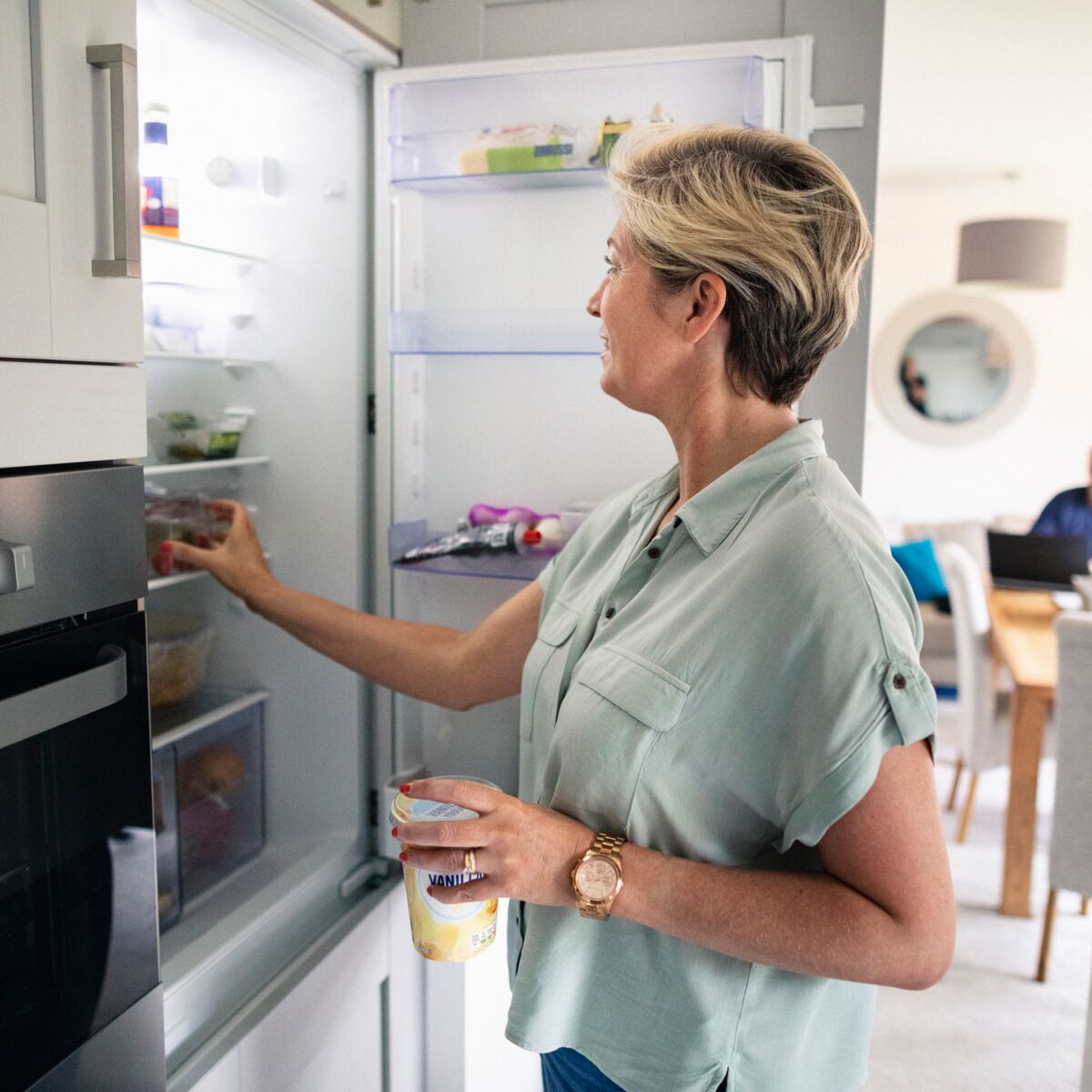
To extend the time between defrosting sessions, adopt these simple steps:
Check the door seal: A door that isn’t properly closed or a worn seal lets in moisture, the main cause of frost.
Limit how often you open the door: Every time you open it, warm air enters and promotes ice buildup.
Wrap your food well: Less humidity in the air means less frost!
Don’t overload the appliance: Leave some space between items to allow for proper circulation of cold air.
In summary
By following these tips, you’ll extend the life of your freezer while reducing your energy consumption. A simple but incredibly effective action!