
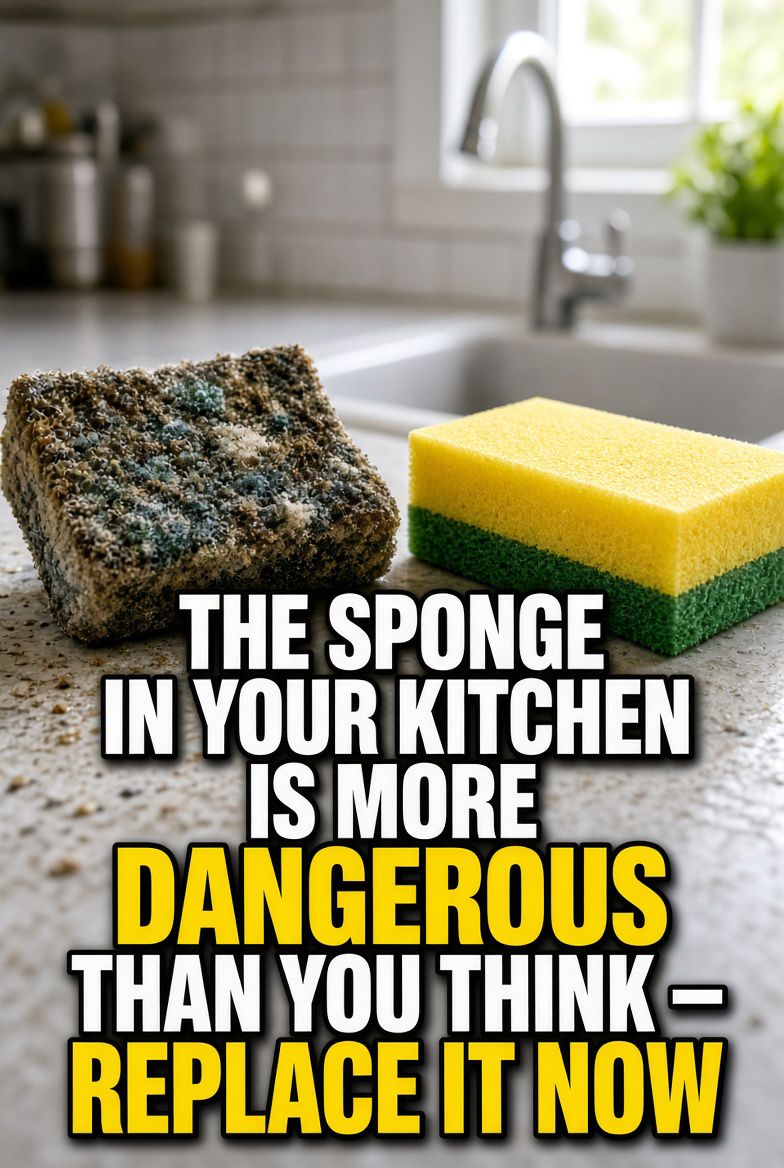
That kitchen sponge sitting next to your sink may look harmless—but if it stays damp and gets used every day, it can become a place where bacteria and other microorganisms accumulate.
Why Do Kitchen Sponges Get Dirty?
Sponges are designed to absorb water and food particles. Unfortunately, that also creates a warm, moist environment where microorganisms can multiply.
Every time you use a sponge to wipe dishes, counters, or food residue, tiny particles can become trapped deep inside it. Simply rinsing the sponge under water may not remove everything.
Signs It’s Time for a New Sponge
ou should consider replacing your sponge when:
* It develops a strong or unpleasant smell.
* It remains dirty or stained even after cleaning.
* It starts falling apart or losing its shape.
* It has been used for a long time without proper cleaning.
* You have used it to clean up raw meat or other potentially contaminated foods.
How to Keep Your Sponge Cleaner
If you aren’t ready to replace it yet, rinse it thoroughly after use and squeeze out excess water. Store it somewhere where it can dry instead of leaving it constantly wet in the sink.
You can also follow the cleaning method recommended by your sponge manufacturer. However, cleaning does not mean a sponge can be used indefinitely.
The Simple Rule